Acertijo Mental: Brain Games
- 4.9
- Rating
- 10.00M
- Installs
- Free
- Price
 Analysis by App-foxy
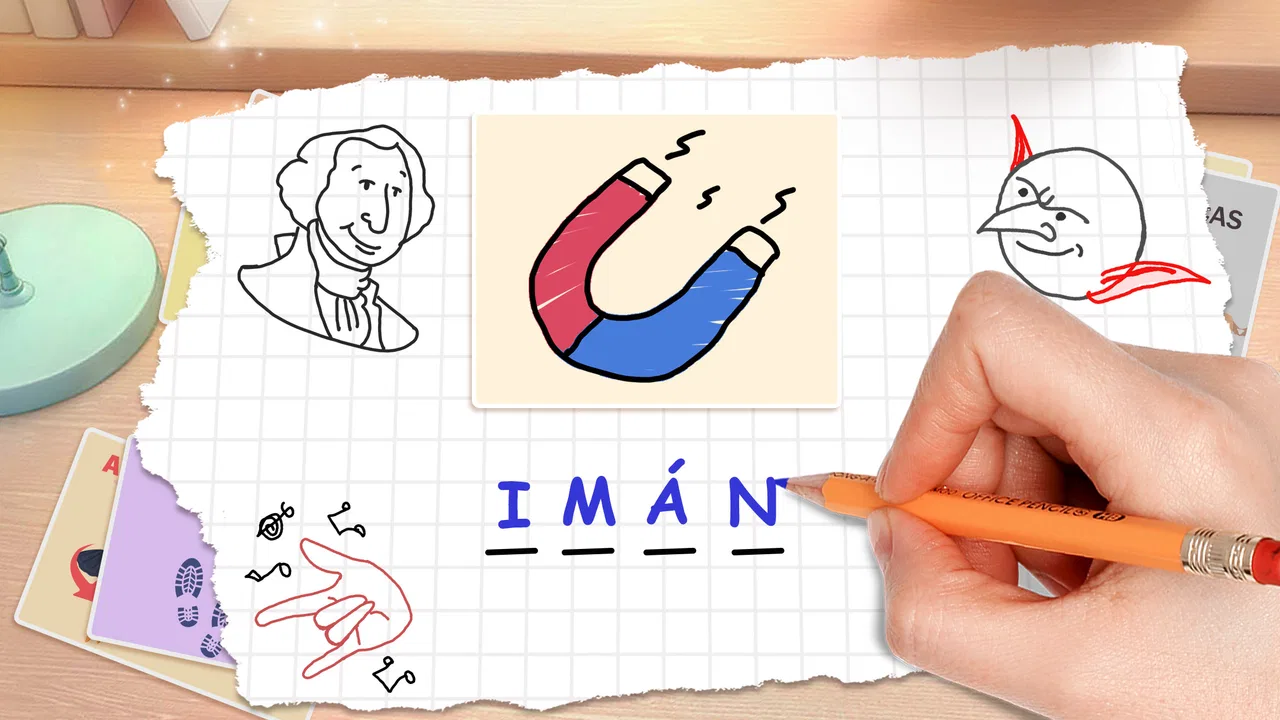
I approached Acertijo Mental: Brain Games as a quick daily trivia game rather than a serious study tool, and that distinction matters. It is built around riddles and word-guessing challenges that ask me to notice clues, test possible answers, and keep moving when my first idea is wrong. The basic loop is easy to understand, but the better experience comes from developing a repeatable way to read each puzzle instead of tapping random answers.
Kerun Games has kept the concept focused: this is a free trivia game for people who enjoy short mental challenges. It has reached over ten million installs and holds a 4.9 average from around 550 thousand ratings, which suggests that its simple format works for a broad audience. I can see why it appeals to casual players, although a high rating should not be mistaken for a guarantee that every riddle will suit every taste.
How I use the game without turning it into a guessing habit
My normal session starts with a small goal: solve a handful of puzzles with attention, rather than rushing through as many as possible. That sounds obvious, but it changes the way I play. When I treat each screen as a tiny language problem, I look for the exact wording, repeated ideas, and the difference between a literal clue and a playful one. When I treat it as a speed test, I tend to choose the first answer that feels familiar and lose the useful part of the challenge.
You May Also Like

 AccuWeather: Weather Radar
AccuWeather Review: A Quick, Clear Forecast for Everyday Decisions
For everyday plans, the best forecast is the one you can understand quickly. AccuWeather makes rain timing, radar, and local conditions easy to act on, with a few trade-offs.

 Hill Climb Racing
Why Hill Climb Racing Still Turns Crashes Into One More Run
A tiny car, a bumpy hill and one more upgrade: Hill Climb Racing keeps resurfacing because its simple chaos makes every near-miss feel personal.

 AliExpress - Shopping App
AliExpress Makes Global Shopping Feel Personal, but Shoppers Bear the Risk
AliExpress turns a global marketplace into a pocket-sized discovery engine. Its reach is useful, its shopping loop compelling, and its trade-offs easy to miss.

 Lords Mobile: Kingdom Wars
Lords Mobile Is a Kingdom-Building Routine, Not a Quick Match
A case-by-case verdict on the building, battles, device demands, and social commitments that make Lords Mobile rewarding for some players and exhausting for others.

 PDF Scanner app - TapScanner
TapScanner Makes Paperwork Easier to Capture, Check, and Share
TapScanner makes scanning with a phone feel less like a rescue operation and more like a dependable step in getting work done. Its capture tools are useful, though not flawless.

 Block Blast!
 Shows How Much a Puzzle Game Can Leave Out
A quiet grid game shows why puzzle players increasingly value instant clarity, repeatable skill and low-pressure play—and where the genre still needs to catch up.
More From Our News Desk
View All News


The most practical routine is to read the full riddle once, pause briefly, and say the likely answer in my head before interacting with the game. If the answer seems obvious, I still check whether the wording supports it. Riddles often rely on a small twist, so an answer that fits only one word may be weaker than one that explains the whole clue. This habit makes the game feel more like reasoning and less like trial and error.
I also separate mistakes into two types. Sometimes I misunderstand the clue; other times I understand it but fail to recognize the expected word. Those are different problems. For the first, I reread the sentence and search for an alternate interpretation. For the second, I think of synonyms, common expressions, and shorter forms of the same idea. That distinction is one of the most useful skills I developed while playing because it prevents me from repeating the same failed guess.
A realistic use case is a short break between tasks. I can open the game while waiting for a kettle to boil or during a commute, solve a few riddles, and stop without needing to remember a complicated storyline. It also works as a light activity to share with someone nearby: one person reads the clue, the other suggests possibilities, and the discussion often becomes more entertaining than the answer itself. I would not use it as a replacement for structured learning, but it is a pleasant way to exercise verbal attention.
What the first sessions reveal
The opening experience is approachable because the premise needs almost no explanation. I do not have to learn a character system, manage a map, or understand a long ruleset before reaching the actual questions. That is a real advantage over larger mobile games that bury their central activity under menus and progression systems.
At the same time, the simplicity creates a clear expectation: the quality of the clues matters more than presentation. If a riddle feels precise and surprising, I want to solve another. If it depends on an awkward interpretation, the game can feel less like a test of insight and more like a search for the author’s intended wording. My enjoyment therefore depends heavily on whether I find the particular puzzle fair.
The game is suitable for Everyone, which matches its general tone and accessible subject matter. Parents may still prefer to look at a session themselves before handing over a device, especially if a younger player is easily frustrated by wordplay. For most casual users, though, the format is friendly rather than intimidating.
Settings and small habits worth checking
I would begin by checking the available in-game options before settling into a routine. The useful principle is not to change everything immediately, but to make the game comfortable for the way I intend to play. If I am using it in short bursts, I want the interaction to stay direct. If I am playing with another person, I give myself more time to discuss a clue instead of treating every pause as wasted time.
Because the core activity is reading, display comfort matters more here than it might in a reflex game. I play with the screen brightness at a level that makes the text easy to scan and avoid squeezing sessions into situations where glare makes the wording hard to see. That is not a special feature of the game, but it has a noticeable effect on performance: many apparent “bad guesses” are really rushed reading.
I also keep a simple mental rule for optional spending. The game is free to download, while in-app purchases range from $0.99 to $29.99 per item. I do not treat a purchase as a solution to a difficult riddle. If I am stuck, I first reread the clue, list related words, and take a short break. This keeps the challenge meaningful and prevents a moment of impatience from deciding whether I spend money.
That is especially important for younger players. A free entry point makes the game easy to try, but optional purchases can still matter on a shared device. I would establish a clear household rule before letting a child play independently. The game’s Everyone rating describes its general content, not a family’s preferred approach to spending.
Another useful setting-related habit is to decide when to stop. I stop after several clues begin to blur together or when I notice that I am selecting answers without explaining why. A break usually helps more than continued tapping. Since this is a compact trivia experience, there is little benefit in forcing a long session when the main mental skill—careful interpretation—has already become tiring.
Faster solving patterns that still preserve the challenge
My fastest improvement came from sorting clues into broad patterns. Some invite a literal object or action, some depend on a familiar phrase, and others use a contrast between what something appears to be and what it actually means. I do not need a formal label for every puzzle, but recognizing the type tells me where to search first.
For a literal clue, I look for the noun or action that carries the most information. For a phrase-based clue, I test common expressions rather than unusual vocabulary. For a deceptive clue, I question the assumption I made in the first few seconds. This approach is faster than producing a long list of unrelated answers because it narrows the search according to the wording.
I also use the “whole sentence” test. After forming an answer, I ask myself whether it explains the complete clue or only one attractive fragment. If it explains just one fragment, I keep thinking. This catches many near-misses and reduces the temptation to blame the game when the answer is merely plausible.
Another technique is to say the clue aloud. Spoken wording can reveal rhythm, emphasis, or a familiar expression that is less obvious when I read silently. This is particularly useful when playing with friends, because the group naturally hears the clue several times and notices different interpretations. It turns the game into a small conversation exercise rather than a solitary sequence of taps.
When I am stuck, I use a three-step reset. First, I remove answers that contradict any part of the clue. Second, I generate synonyms for the central idea. Third, I leave the puzzle for a moment and return with a clean interpretation. The third step sounds inefficient, but it often saves time because staring at the same wording encourages me to defend a bad first assumption.
I avoid searching the internet immediately. Looking up an answer may end the difficulty, but it also removes the reasoning that makes a riddle satisfying. If I eventually need help, I prefer to use the game’s own available assistance rather than searching for a complete solution elsewhere. That preserves more of the intended challenge and lowers the risk of encountering unrelated spoilers or inaccurate explanations.
Where the game is strong, and where it reaches its limits
The strongest part of Acertijo Mental is its low barrier to entry. I can start solving quickly, and the word-focused format makes it suitable for short sessions. It is also easier to share than many alternatives because another person can understand the clue without learning a control scheme. For a casual player who wants riddles instead of action, that focus is more valuable than elaborate graphics or a large progression system.
Compared with a traditional crossword, the game feels less demanding in terms of planning a whole grid. I can approach one clue at a time, which is better when I have only a few minutes. A crossword is usually the better choice when I want a deeper, more connected vocabulary challenge. Compared with a general quiz app, this game places more emphasis on interpretation and wordplay than on recalling facts from a wide range of subjects.
That comparison also explains who may want to skip it. If I want verified knowledge questions, detailed explanations, competitive scoring, or a structured learning path, a conventional quiz platform may be a better fit. If I prefer visual puzzles, logic grids, or number problems, the word-centered design may feel repetitive. The game is not trying to cover every kind of brain training, and I would not recommend it to someone who dislikes ambiguity in answers.
Fairness is the main limitation I notice. A riddle can be entertaining precisely because it has a twist, but a twist becomes frustrating when several answers seem equally reasonable. Experienced players learn to think in terms of intended wording, yet that can feel like adapting to the author rather than solving a purely logical problem. I accept that trade-off because wordplay is the point, but users who need one objectively provable answer may lose patience.
Repetition is another possible weakness. The basic interaction remains centered on reading a clue and finding a word, so the novelty depends on the variety and construction of the riddles. I enjoy that narrow focus in short sessions; over a long uninterrupted period, it can become predictable. My solution is to use it as one small activity rather than expecting it to replace every other kind of puzzle game.
The current version is 2.5101, and the game runs on Android starting with version 6.0. That makes it accessible on a wide range of devices, including older phones that may not handle demanding games comfortably. I still judge the experience by screen readability and responsiveness on the particular phone in use, because a minimum operating-system requirement does not automatically make every device equally pleasant for reading-heavy play.
Who gets the most from it
I think the best audience is someone who enjoys language, quick riddles, and the small satisfaction of spotting an unexpected connection. It is a good companion for waiting rooms, short breaks, family play, or a quiet wind-down before bed. The free price makes trying it low risk, although the optional purchase range means I would keep spending boundaries in mind from the start.
It can also work for someone who wants a gentle mental warm-up. I use the first few puzzles to shift attention away from work, not to measure intelligence. That distinction keeps the experience positive. A difficult clue is not evidence that I am bad at reasoning; it may simply use a different association or a less familiar phrase.
I would be more cautious recommending it to players who become annoyed by subjective wording. The game rewards flexibility, and sometimes the right approach is to abandon a technically defensible answer and search for the most natural word the clue is pointing toward. That is enjoyable for me, but it is not the same as solving a mathematical proof or answering a factual question with one fixed standard.
The developer, Kerun Games, has positioned the title as a straightforward trivia experience rather than a complex social or competitive platform. That focus helps the game remain approachable, but it also means I would choose another category when I need multiplayer depth, detailed progress tracking, or a broad curriculum. Its value is concentrated in the moment-to-moment riddle solving.
My verdict after building a repeatable routine
After playing with a few deliberate habits, I find Acertijo Mental: Brain Games easy to recommend to the right person. I like that it asks me to read carefully, challenge my first assumption, and recognize how language can hide an answer in plain sight. The best sessions are short, focused, and occasionally shared with someone else, because discussing a clue exposes interpretations I would not have considered alone.
I would not describe it as a complete brain-training program, and I would not choose it over a crossword for sustained vocabulary work or over a knowledge quiz for learning facts. Its riddles can also feel debatable when the wording supports more than one answer. Those are meaningful limitations, not minor details, so anyone seeking strict logic or academic content should look elsewhere.
For casual wordplay, however, the balance is appealing. It is free to start, rated Everyone, available on older Android versions, and supported by a large player base. I recommend setting a sensible session limit, resisting the urge to guess repeatedly, and using a read–classify–rethink routine when a clue stalls me. The real strength is not simply finding words quickly; it is learning to inspect the wording before committing to one.
My final judgment is positive but specific: choose this game if you want accessible riddles that fit naturally into everyday gaps. Skip it if you need factual quizzes, deep progression, or perfectly objective answers. Used on its own terms, it is a compact and enjoyable mental diversion, and the high average rating feels understandable without making the game immune to the occasional awkward clue.
FAQs for Acertijo Mental: Brain Games
01What is Acertijo Mental: Brain Games?
Acertijo Mental: Brain Games is a mobile app designed to challenge and enhance your cognitive abilities through a variety of puzzles and brain teasers. It offers a range of games that test memory, logic, and problem-solving skills, making it suitable for users who enjoy mental exercises.
02Is Acertijo Mental: Brain Games suitable for all ages?
Yes, Acertijo Mental: Brain Games is designed to be accessible to users of all ages. The app features games with varying levels of difficulty, so both children and adults can enjoy and benefit from the challenges. However, some games may be more suitable for older children and adults due to their complexity.
03Does Acertijo Mental: Brain Games require an internet connection?
No, Acertijo Mental: Brain Games can be played offline, allowing you to enjoy the puzzles anytime and anywhere without an internet connection. However, some features like updates or leaderboards may require internet access to function properly.
04Are there in-app purchases in Acertijo Mental: Brain Games?
Yes, while Acertijo Mental: Brain Games is free to download, it offers in-app purchases. These purchases can unlock additional content, remove ads, or provide hints to help solve more challenging puzzles. Users can enjoy the basic features without making any purchases, though.
05How does Acertijo Mental: Brain Games track my progress?
Acertijo Mental: Brain Games tracks your progress through a built-in system that records your scores and achievements. This allows you to monitor your improvement over time. You can also compare your performance with other players through online leaderboards if you choose to connect your account.
Pros
- Challenging puzzles boost cognitive skills.
- User-friendly interface for easy navigation.
- Wide variety of mini-games to enjoy.
- Regular updates with new brainteasers.
- Offline mode available for on-the-go play.
Cons
- Limited free content; in-app purchases needed.
- Some puzzles may be too challenging for beginners.
- Occasional ads can disrupt gameplay.
- No option to customize difficulty settings.
- Requires frequent updates for smooth performance.

Acertijo Mental: Brain Games
Gallery